The Science of Cardamom Cultivation
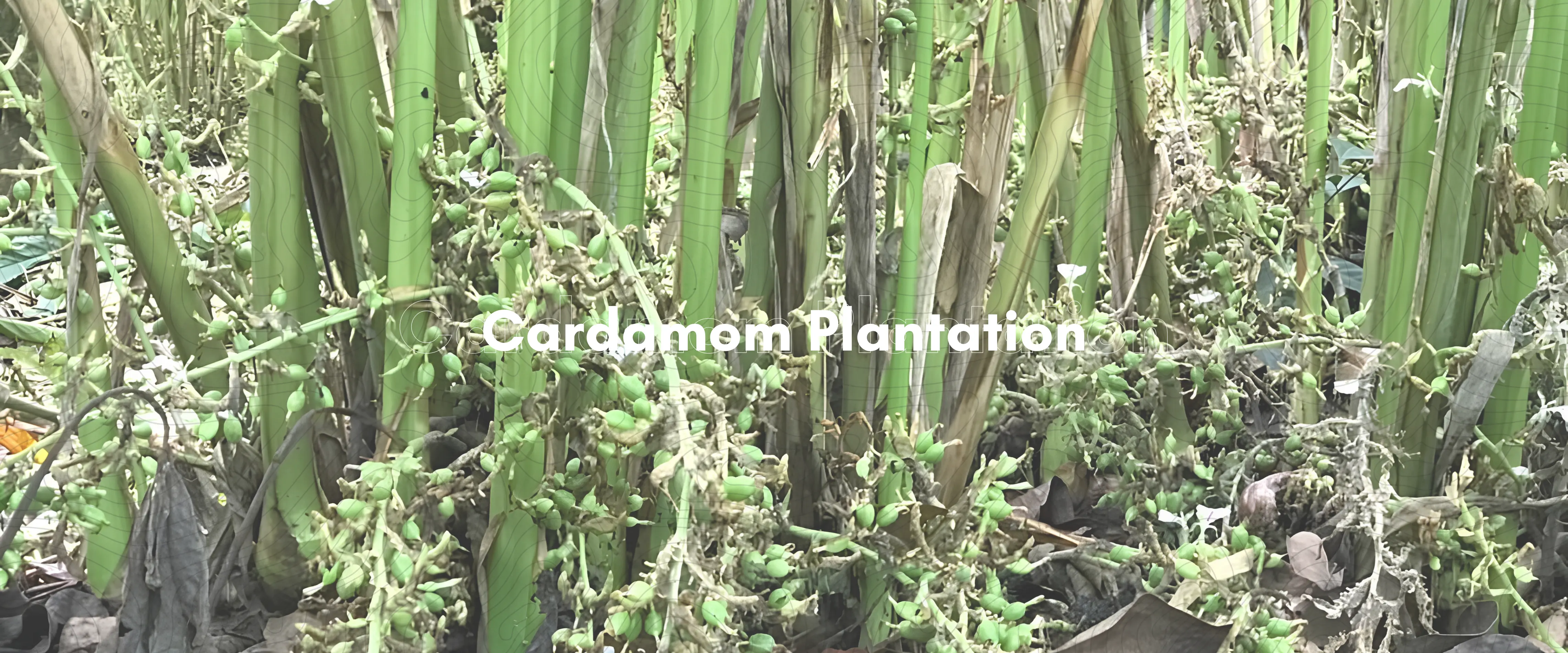
Cardamom (Elettaria cardamomum), widely acclaimed as the “Queen of Spices,” is a high-value sciophilous (shade-loving) perennial crop. Cultivating premium green cardamom requires precise microclimate management, disciplined agronomy, and temperature-controlled curing to retain its vibrant natural chlorophyll and volatile essential oils.

Identifying & Selecting the Plantation Field
A high-yielding plantation relies on rigorous ecological selection and terroir conditions.
Rainforest Environment
High Ambient Humidity
Cardamom thrives under the microclimate of evergreen tropical rainforests, requiring high ambient humidity throughout the year.
Elevation / Altitude
600m – 1,500m MSL
Optimal growth and maximum essential oil accumulation are achieved at mountain altitudes between 600 to 1,500 meters above sea level.
Shade Trees
40% – 50% Filtered Light
Requires a multi-tiered natural canopy providing 40% to 50% dappled shade from Karona, Cedar, Dadap, and Jackfruit trees.
Water Source
Micro-sprinkler & Drip
Constant access to pristine mountain streams or ponds is necessary to supply 25-30L/clump weekly during hot summer months.
Rich Forest Soil
pH 5.5 – 6.5 Acidic Loam
Thrives in deep, rich forest loam or well-drained lateritic soil high in organic humus, leaf mould, and readily available nitrogen.
Natural Safeguards
Canopy Windbreak
The multi-tiered forest canopy shields delicate panicles and pseudostems from severe wind damage, cloudbursts, and scorch.
Avoid Waterlogging
Strict Gradient Drainage
Roots are highly vulnerable to Phytophthora root rot. Low-lying stagnation spots and heavy stagnant clay must strictly be avoided.
Climate & Rainfall
1,500mm – 4,000mm Annual
Requires a warm, humid climate with evenly distributed annual rainfall across 150+ rainy days to maintain leaf turgidity.
Identifying Varieties of Green Cardamom
Green cardamom cultivars are primarily differentiated by plant stature, panicle growth angle, and capsule size:
Malabar
Cultivar ProfileHighly tolerant to drought and high altitude; adapts very well to Karnataka and lower altitude belts.
Mysore
Cultivar ProfileBold, premium elongated pods; demands dense multi-tiered shade; rich, spicy camphor aroma with high oil yield.
Vazhuka
Cultivar ProfileMost popular commercial cultivar in Idukki (Kerala). Blends high yield, bold plump pods, and exceptional climate hardiness.
| Variety | Growth Habit | Panicle Axis | Pod Characteristics | Adaptability |
|---|---|---|---|---|
| Malabar | Medium (2.0 – 3.0m) | Prostrate (Creeps along ground) | Round, compact capsules | Drought Resilient |
| Mysore | Tall erect (3.0 – 4.5m) | Erect (Grows vertically upward) | Bold, elongated ribbed pods | High Essential Oil |
| Vazhuka | Robust (3.0 – 4.0m) | Semi-erect / Flexed (45° angle) | Deep emerald bold pods | Highest Yielding Hybrid |
Nursery Management & Field Propagation
Healthy seedlings guarantee high-yielding plantations. Follow this verified step-by-step nursery flow:
Seed Selection & Treatment
Collect fully ripe, bold, disease-free pods from certified mother plants. Extract seeds, wash off mucilage, and treat with Trichoderma viride or Pseudomonas fluorescens to prevent damping-off rot.
Raised Nursery Seedbeds
Prepare raised beds (1m wide × 30cm high) enriched with forest loam, vermicompost, and river sand. Cover with paddy straw or dried banana leaves to retain constant moisture.
Polybag Secondary Nursery
Transfer 3-4 leaf stage sprouts into polybags with potting mixture (equal parts soil, compost, and sand). Provide 50% agro-shade net protection and gentle micro-misting.
Pit Prep & Field Transplanting
Dig pits of 60cm × 60cm × 45cm at 2m × 2m spacing, filled with topsoil and composted farmyard manure. Plant 10-12 month seedlings with rhizome crown flush with the soil surface.
Field Agronomy & Nutrient Management
Optimized nutritional dosage and biological crop protection metrics:
Micro-Sprinkler & Drip Irrigation
Cardamom cannot tolerate water stress during summer flowering. Overhead micro-sprinklers keep ambient temperature low and humidity elevated.
Targeted N-P-K Fertilization
Potassium is heavily supplemented to boost capsule weight, skin elasticity, and volatile oil density, balanced with phosphorus for root vigor.
Enriched Organic Manuring
Neem cake powder mixed with vermicompost suppresses parasitic root-knot nematodes while steadily supplying bio-available organic humus.
Integrated Pest & Blight Control
Blue sticky traps for Thrips (Sciothrips cardamomi), targeted biological fungal controls for borers, and copper prophylactic sprays for Azhukal rot.
Plantation Maintenance & Soil Care
Slash Weeding & Mulch Retention
Perform manual slash weeding 2–3 times a year around the root periphery without digging or tearing shallow, tender cardamom roots.
Organic Leaf Mulching (5–10cm)
Keep the base shielded year-round with fallen forest shade leaves, preserving root zone moisture, stopping erosion, and enhancing microbial activity.
Dynamic Canopy Shade Regulation
Thin canopy branches before the monsoon to allow necessary sunlight, and let overhead leaves flourish before summer to prevent sunscald.
Sand Work & Tiller Aeration
Lightly aerate soil surface once or twice yearly with coarse river sand and compost top-dressing to stimulate prolific new tiller and spike emergence.
Anatomy & Morphology of the Cardamom Plant
Understanding specialized botanical terms is essential for diagnosing flower setting and crop forecasting:

Chimbu
Stage 01 • Vegetative ShootYoung Basal Spike
The sharp, pointed new spike that emerges from the base of the rhizome clump, destined to become a fruit-bearing panicle branch.
Pseudostem & Leaf
Stage 02 • Vegetative CanopyPhotosynthetic Canopy
Upright clustered leafy pseudostems (2m to 4.5m tall) carrying broad lanceolate leaves that harness filtered sunlight and protect root crown.
Charam
Stage 03 • Raceme AxisFlowering Panicle Stem
The elongated reproductive stem that creeps prostrate or rises from the clump base, carrying clusters of flower clusters.
Kanni
Stage 04 • Fruit Setting JointFlowering Nodes & Racemes
The individual nodes and branchlets positioned along the Charam where white-violet flowers blossom and set fruit capsules.
Biological Fruit Growth Stages (90–120 Days Timeline)
Cardamom capsules mature over a precise 4-month cycle following flower opening. Visualizing the development milestones:
Flower
Delicate white orchid-like flower with fine purple lines opens in early morning for pollinator bees.
Pinju
Tiny green juvenile fruit capsule develops immediately after successful bee pollination and floral drop.
Varagarasi
Mid-growth capsule where inside seeds begin distinct segmentation and firm texture, pod turns bright light-green.
Karunkai
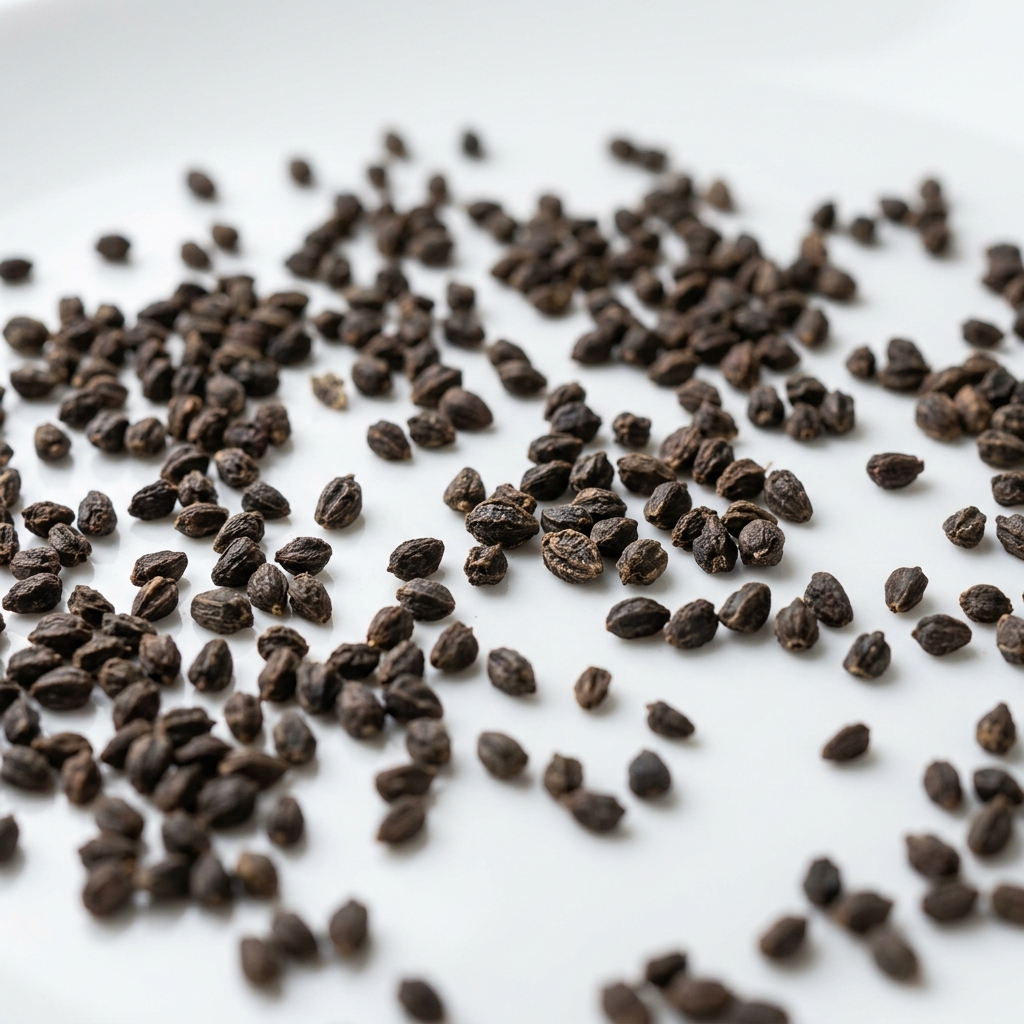
Dark green, firm, weighty pod. Seeds inside turn dark brown/black with high essential oil. Prime harvest stage.
Mature Pod
Full green, crisp capsule ready for gentle hand-picking before over-ripening splits open pod seams.
Post-Harvest Processing & Global Distribution
Preserving vibrant emerald color and pungent aroma requires precise curing within 24 hours of harvest:
Hand Harvesting / Selective Picking
Pickers hand-harvest individual capsules at 15 to 25-day cycles, carefully detaching only pods that have reached the mature Karunkai stage.
Water Washing & 2% Soda Dip
Washed in fresh water to clear estate silt, followed by a quick dip in 2% sodium carbonate solution to safeguard natural green chlorophyll.
Scientific Curing & Kiln Drying
Fresh pods enter hot-air flue-pipe curing chambers, gently reducing water content from 80% down to safe storage stability of 8%–10%.
Mechanical Polishing & Calyx Cleaning
Pods are gently rubbed across wire mesh sieves and rotating drums to remove dried calyx tails, soil particles, and surface dust.
Vibrating Sieve Grading & Sorting
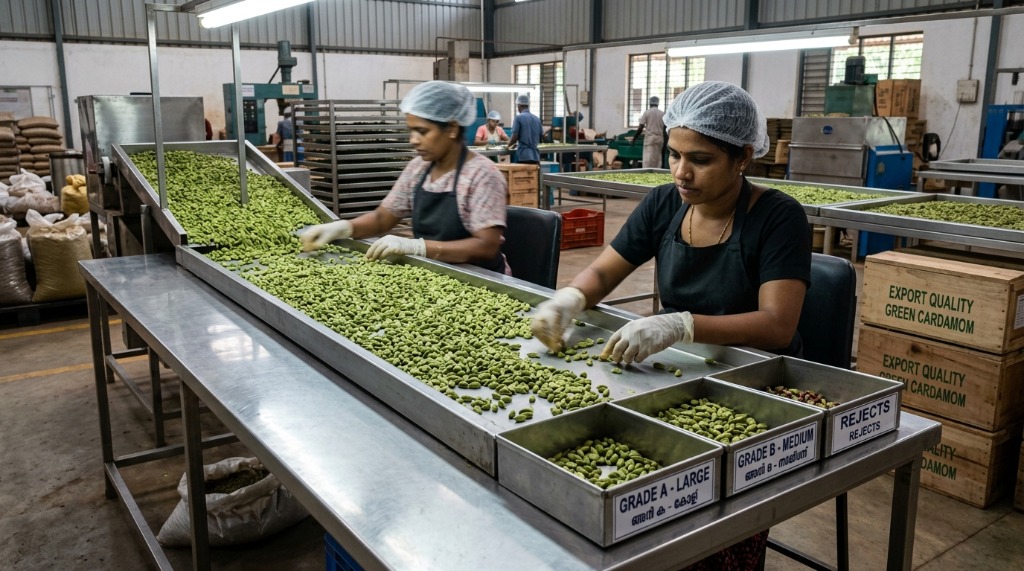
Multi-deck oscillating sieves segregate batches into exact diameter grades: Jumbo 8.5mm+, Bold 8mm, 7.5mm, 7mm, and split capsules.
Hermetic Poly-Lined Packaging
Packed into black poly-lined multi-wall sacks or airtight food-grade cartons to retain volatile aroma compounds and prevent discoloration.
Auctions & Global Export Distribution
Consignments move directly to spice auction hubs in Bodinayakanur and Vandanmedu, and onward to premium worldwide spice markets.
Graded for Global Perfection
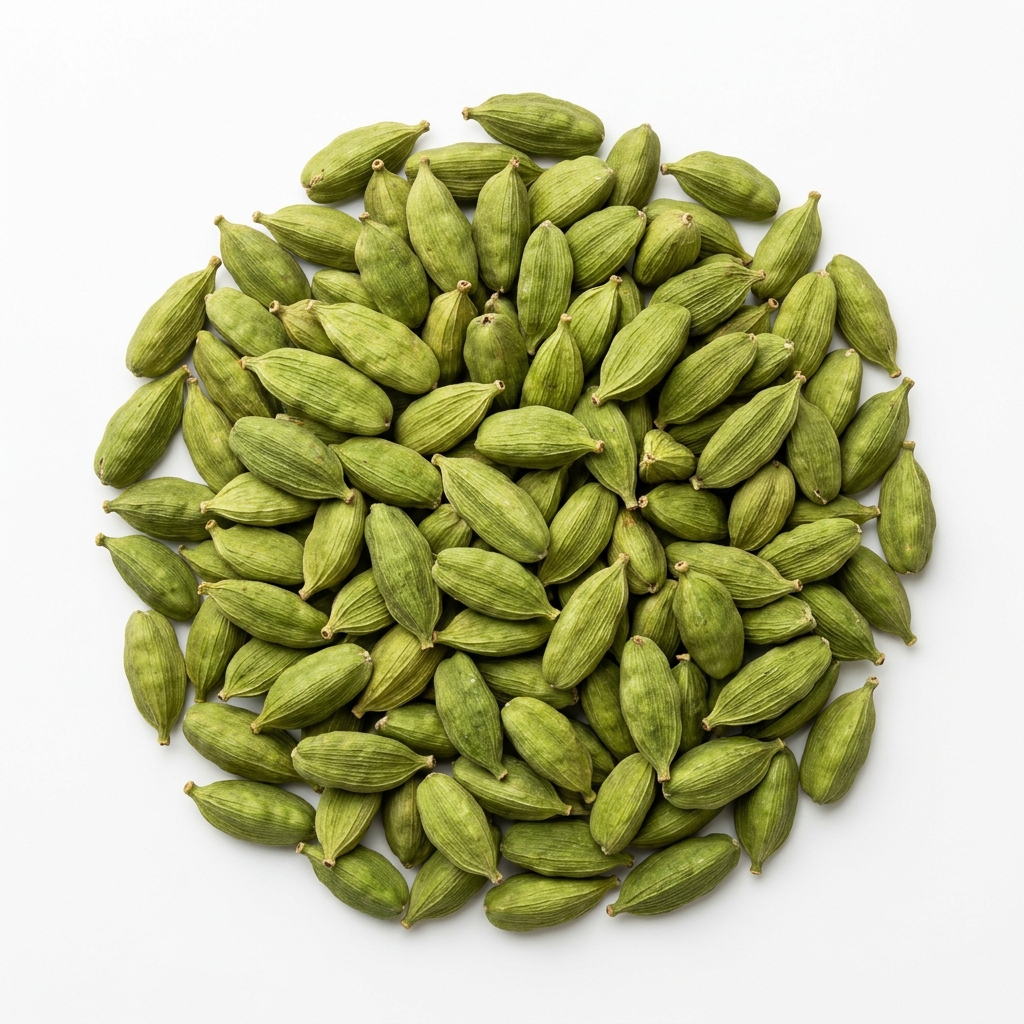
Our pods undergo sorting through calibrated screens into Extra Bold (8.5mm+), Super Bold (8mm), and Bold (7.5mm) grades, sealing peak volatile oil content into every batch.